


El Paso
El Paso is the largest municipality on La Palma and, without a doubt, one of the places you will pass through during your visit to the island.
Tajogaite, La Palma’s newest volcano
The first thing that will catch your attention when you arrive here is the Tajogaite volcano, the island’s most recent volcano, which marked a turning point for the people of La Palma. Its immense lava flow destroyed more than 3,000 buildings and led to the evacuation of 7,000 people across the island. It can still be seen from the spectacular viewpoints of Tacande and Llanos del Jable. And of course, you shouldn’t miss the guided hike to its crater, offered by companies such as La Palma Outdoor. For safety and conservation reasons, the crater cannot be visited independently.
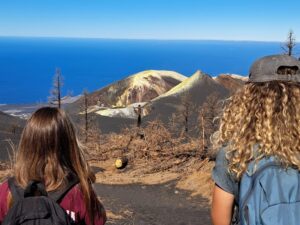
El Paso and its volcanoes
If you’re interested in volcanism, you should also visit the Cueva de Las Palomas, a volcanic lava tube — a cave formed by magma from the San Juan volcano, which erupted in 1949 and created numerous underground cavities.
But El Paso is much more than just one volcano. In fact, there are several in this municipality: Tacande, San Juan and the Campanarios de Jedey are examples of other volcanoes that have erupted here. The Route of the Volcanoes, one of the island’s most famous hiking trails, allows you to follow the ridge of the Cumbre Vieja mountain range, exploring several craters and seeing how lava flows descend on both sides of the island, with spectacular views of the sea.
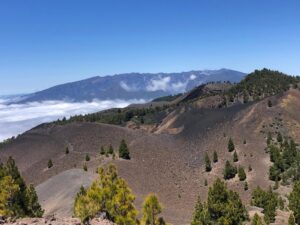
Caldera de Taburiente
El Paso is definitely a municipality best explored on foot. Some of the island’s best hiking trails are found here, as the heart of the island is home to the Caldera de Taburiente National Park, an impressive valley formed after the collapse of what was once the island’s highest mountain. Visiting Caldera de Taburiente is almost a must during your stay on La Palma. You can choose between two routes: a shorter hike starting from La Cumbrecita (2 hours) and a full-day hike for mountain lovers starting from Los Brecitos. Be warned: if you choose this unforgettable route, you’ll be able to swim in the only river in the Canary Islands, which flows through both sides of the Caldera. You can also enjoy its natural pools and waterfalls!
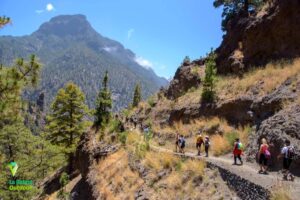
More hiking in El Paso
El Paso is also home to the most recognisable peak in the western part of the island: Bejenado. A true local landmark, its summit offers spectacular views of the Caldera and Roque de los Muchachos. But if you’re up for a challenge, we recommend climbing via the Hilera, the ridge that separates the eastern and western parts of the island, and spending the night at the Punta de Los Roques mountain refuge, one of the island’s least-known yet most spectacular places. This refuge is free and open all year round. It has water, although it is untreated, tables and good insulation. You’ll need a sleeping bag and sleeping mat to enjoy a comfortable night. From here, you can watch both the sunset and the sunrise.
Have you written everything down? If you don’t have enough time to visit all these places during a single trip to the island, get ready to come back, because they’re all spectacular!
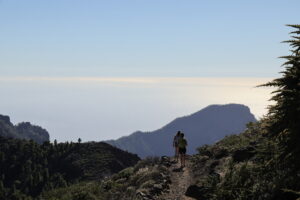
Guided hiking tours:
- Visit to Tajogaite volcano.
- Sunset visit to Tajogaite volcano with a picnic
- Cueva de Las Palomas volcanic lava tube
- Guided hike through Caldera de Taburiente
- Guided hike along the Route of the Volcanoes
Outdoor natural and historical heritage:
- La Cumbrecita viewpoint. Free parking. Parking spaces and time slots must be reserved through Google because availability is limited due to the small parking area. Several hiking trails in the national park can be accessed from this point.
- Punta de los Roques refuge – Booking options are available through Google. This mountain refuge is a place to spend the night or take a break during a hike. At present, no fee is required to stay there. It forms part of the Crestería Route, which is included in the Ruta del Bastón, or GR 131 long-distance hiking trail. It is managed by Caldera de Taburiente National Park.
- Petroglyphs: Among the attractions to visit in El Paso are archaeological sites left by the island’s Indigenous inhabitants, including so-called petroglyphs, which bear witness to La Palma’s pre-colonial history. The El Verde petroglyphs are located very close to the historic town centre. The La Fajana petroglyphs are also worth visiting, both for their location and for the variety of engravings found at the site.
Heritage interpretation centres:
-
El Paso Tourist Information Office Here you’ll find plenty of information about La Palma, and you can also buy souvenirs, gifts and a wide range of local products.
-
Las Hilanderas Silk Museum Here you can learn about traditional local silk-making processes. The museum features textile exhibitions and a gift shop.
-
Benehauno – El Paso Petroglyph Interpretation Centre Here you can discover the archaeological richness of El Paso, which, in Indigenous times, was divided into four independent cantons: Aceró, Aridane, Tihuya and Guehebey.
-
Caldera de Taburiente Visitor Centre It houses geological exhibitions and a garden showcasing La Palma’s native flora.
Restaurants serving traditional Canarian cuisine:
Other recommended restaurants:
Local products:
Transport:
-
El Paso Taxi Association Association of taxi drivers in the municipality of El Paso.