


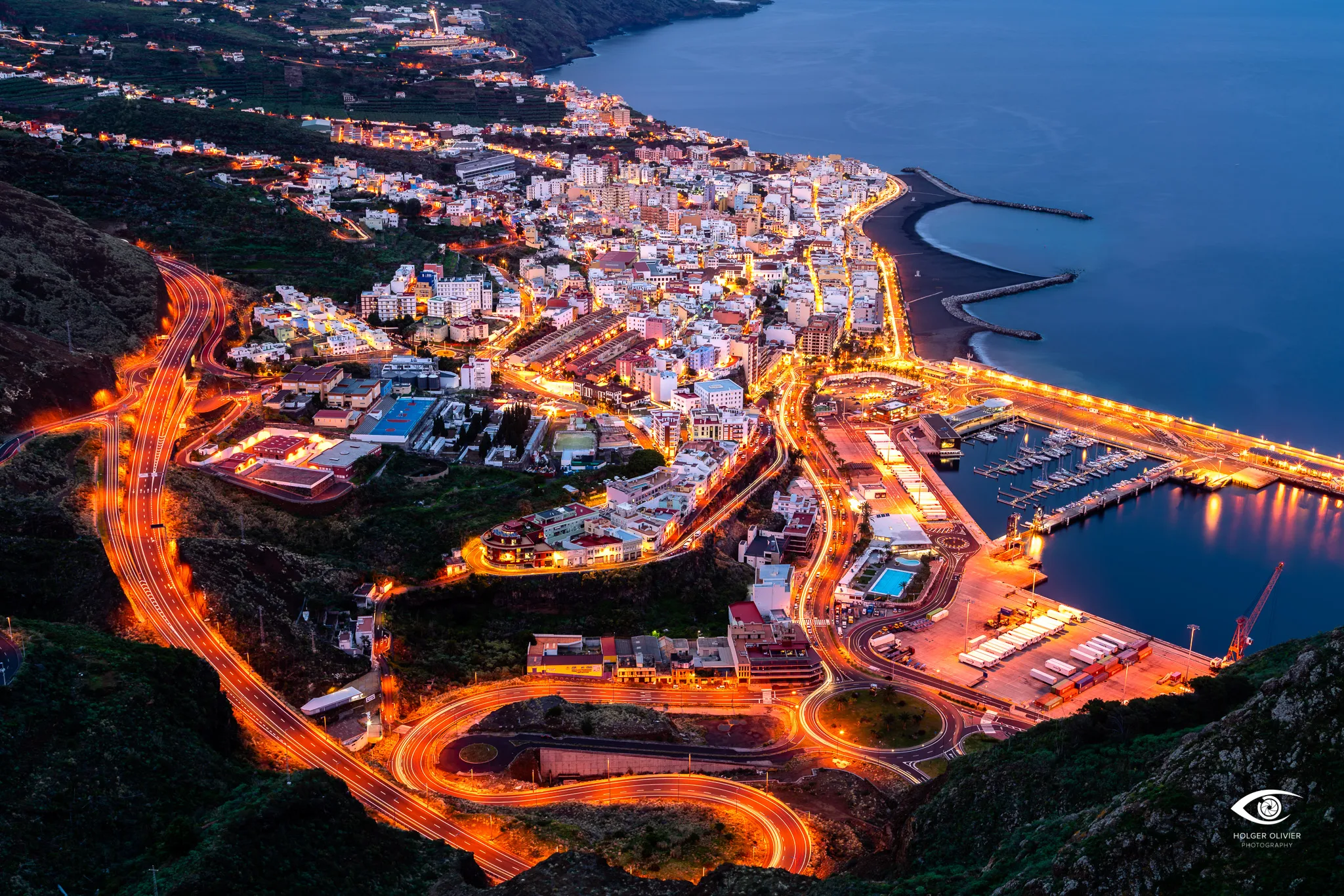
Santa Cruz de La Palma
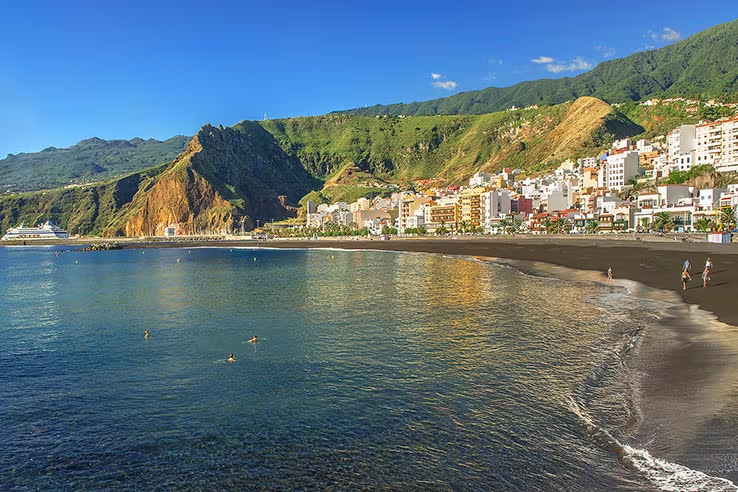
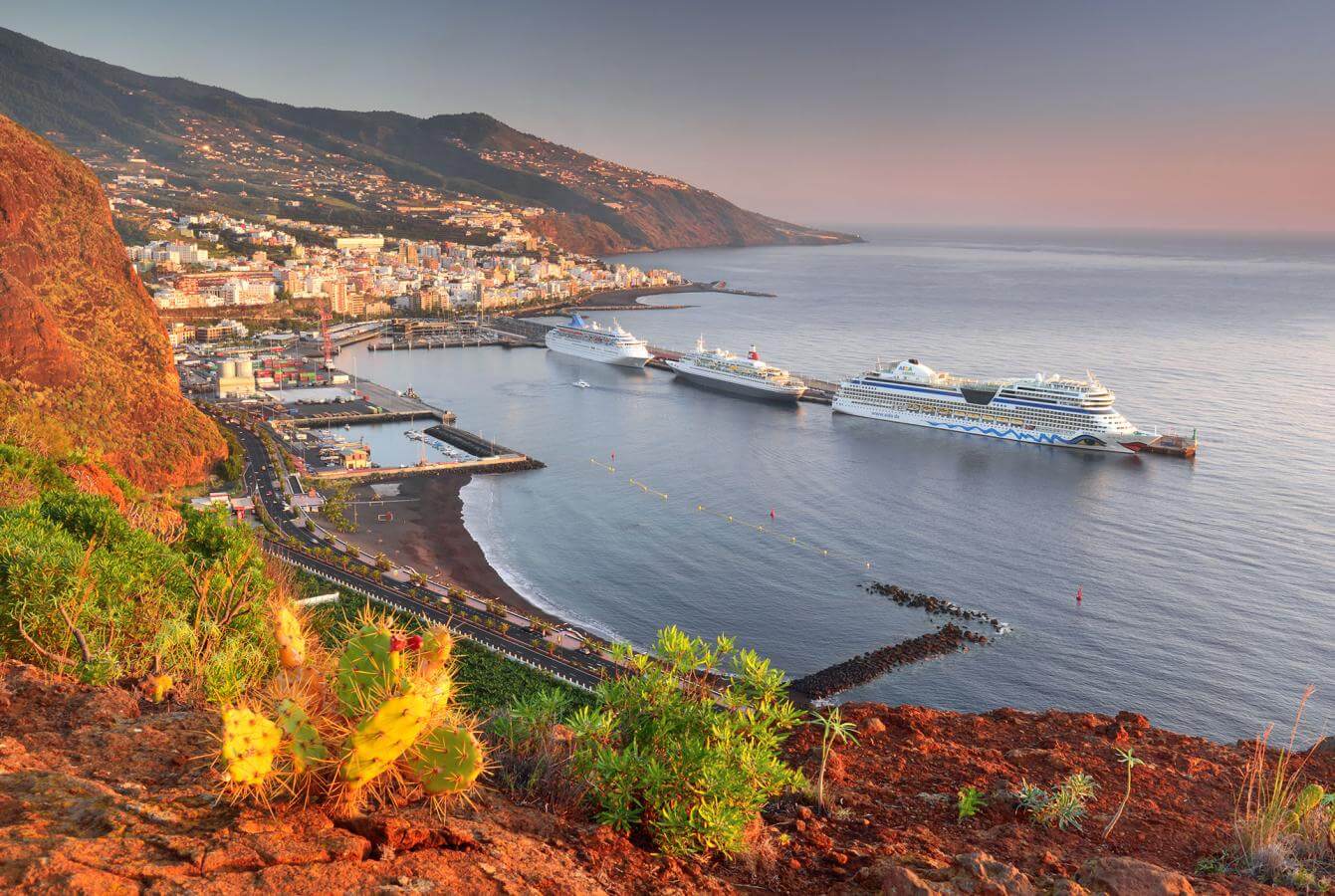
The capital of the island of La Palma, founded on May 3, 1493, under the name of Villa de Apurón, lies along a long beach. Facing it stands a spectacular cliff, La Caldereta, the largest crater on the entire island.
Surrounded by ravines and offering spectacular views of the capital, the Royal Sanctuary of Our Lady of the Snows (Real Santuario de Nuestra Señora la Virgen de las Nieves) is home to the patron saint of La Palma. Her festivities are celebrated in grand style every five years. One of the most unusual traditions takes place during the festival nights, when some curious “dwarfs” come out to dance to a song whose melody is instantly recognised by all the people of La Palma and deeply moves them.
In the time of the Benahoaritas, Santa Cruz was known as the “cantón de Tedote”. Its mencey (indigenous ruler) was Bentacayse, who was left with a limp after being swept away by the torrential waters of the ravine, with his leg becoming trapped in a tree trunk. The island’s first parliament was held in a cave, the Cueva de Carías, located near the Barco de la Virgen. Imagine the Benahoaritas and the Castilians gathered in that cave, trying to reach agreements on how to govern the island.
The climate is mild almost all year round. However, the sky is often covered by clouds known locally as “panza de burro” (donkey’s belly), due to the influence of the trade winds coming from the Atlantic Ocean.
Outdoor Natural Heritage:
Heritage Interpretation Centres:
Restaurants:
- Restaurante Lucy (fish and seafood)
- Restaurante la Placeta (Canarian and Mediterranean cuisine)
- Restaurante El Casino Santa Cruz de La Palma (creative Mediterranean cuisine)
Tapas Bars:
- La Lonja (traditional Canarian cuisine and fusion)
- La isla de Goya (tapas and Spanish cuisine)
- El cuarto de Tula (tapas, Spanish and Canarian cuisine)
Local Produce: